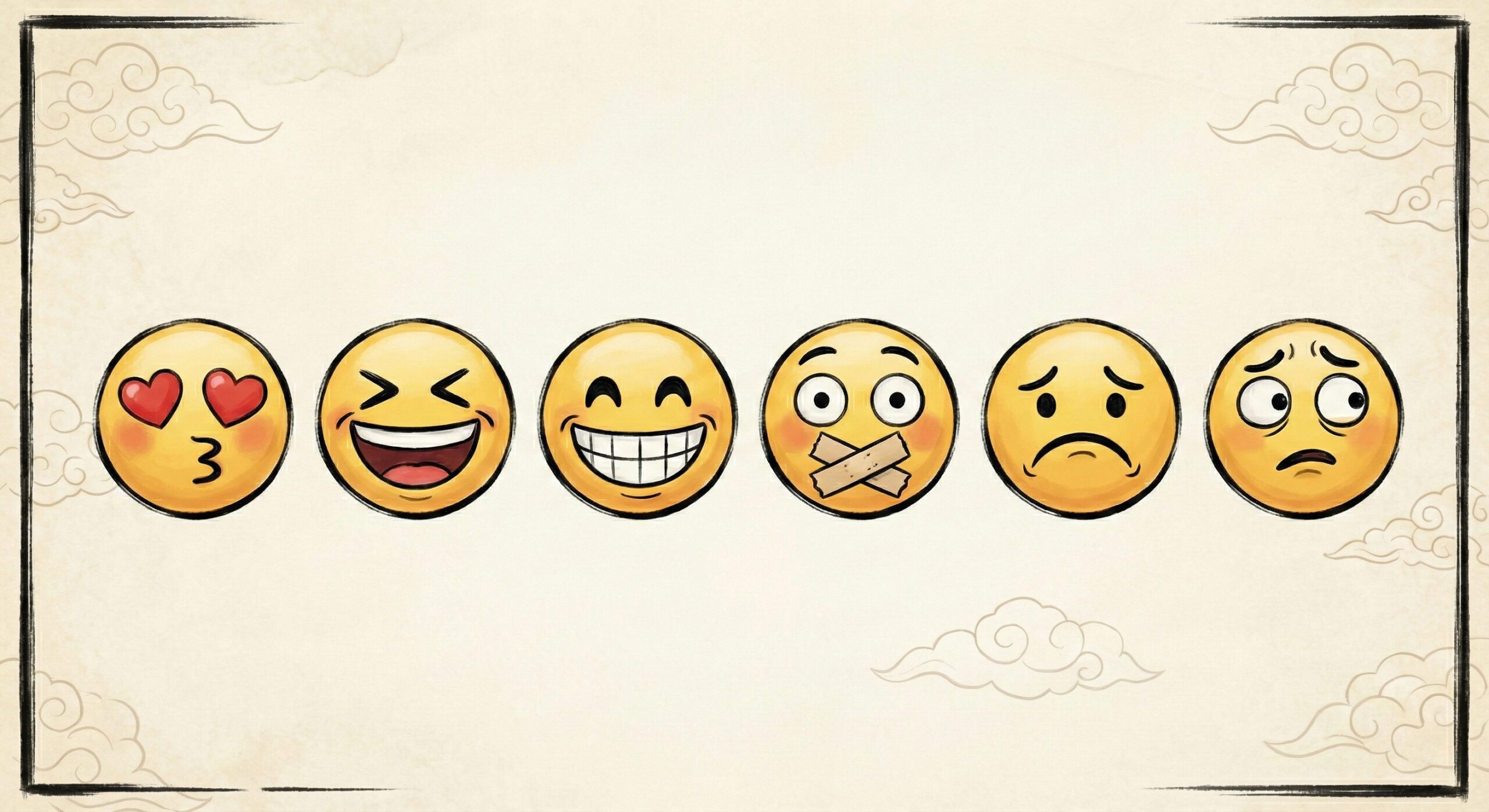
Emotions are more than just fleeting feelings — they influence our physical health, daily habits, and overall sense of well-being. In Traditional Chinese Medicine (TCM), emotional health isn’t a separate category from physical health; the two are deeply interconnected. At Integrative Acupuncture, we believe that understanding this relationship empowers you to support your body and spirit more fully.
In this article, we’ll explore how TCM views emotions, how emotional imbalance can show up in the body, and practical ways acupuncture and integrative care can help restore harmony. Whether you’re new to TCM or a returning patient, this friendly guide will help you see how healing the heart and mind go hand in hand.

A TCM View of Emotions
In TCM, emotions are seen as energetic expressions that affect and reflect the state of the body’s internal systems. Rather than being “just in your head,” emotions are understood as responses linked to specific organ systems. When emotions are balanced, Qi (pronounced “chee”), the body’s life force, flows smoothly. When emotions become stagnant, excessive, or suppressed, this can disrupt Qi and contribute to physical or emotional symptoms.
Here’s a simplified overview of how TCM associates major emotions with organ systems:
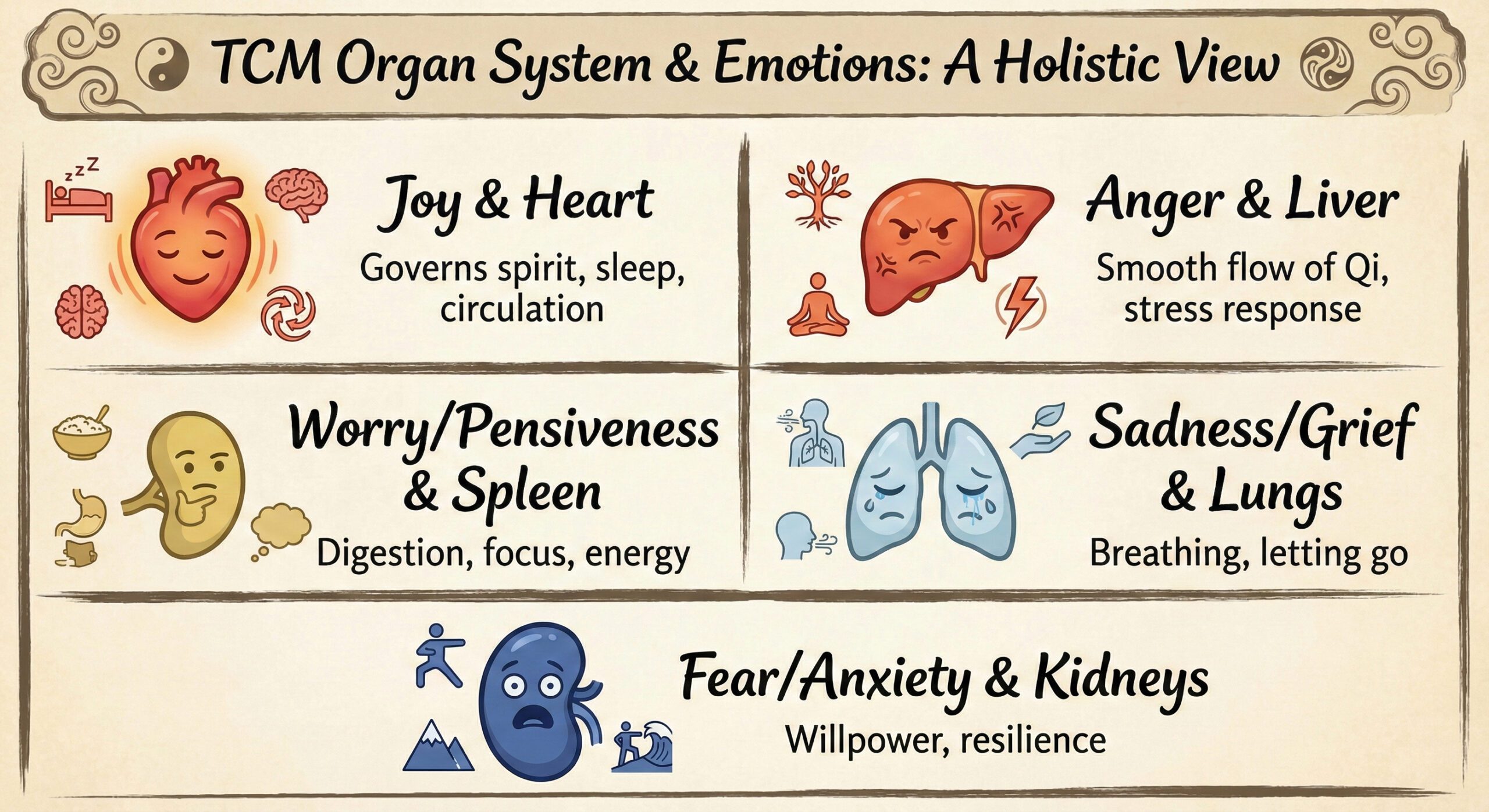
These connections aren’t symbolic — they reflect how interconnected emotional states and physical processes are in TCM theory. For more detailed information on the five emotions, check out our blog post The Five Emotions in TCM.
The Heart and the Spirit (Shen)
In TCM, the Heart is considered the “Emperor” organ because it houses the Shen — often translated as spirit or mind. The Shen encompasses consciousness, memory, sleep, emotional balance, and our overall sense of joy. When the Heart and Shen are balanced, people tend to feel calm, engaged, emotionally open, and mentally clear.
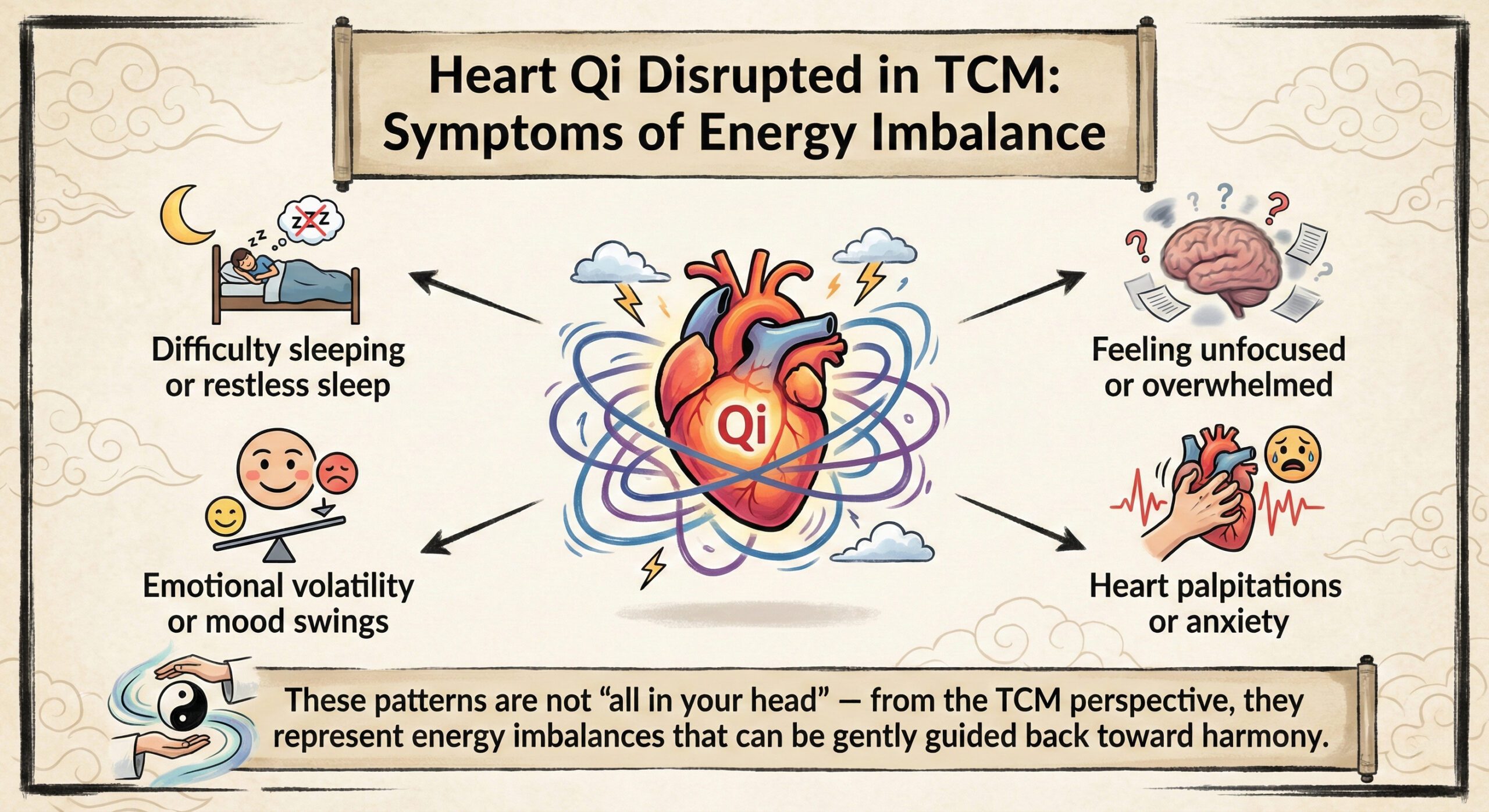
When Heart Qi is disrupted, TCM practitioners may see symptoms such as:
- Difficulty sleeping or restless sleep
- Emotional volatility or mood swings
- Feeling unfocused or overwhelmed
- Heart palpitations or anxiety
These patterns are not “all in your head” — from the TCM perspective, they represent energy imbalances that can be gently guided back toward harmony.
Curious how acupuncture supports balanced Qi and emotional ease? See our post on What Is Qi and Why It Matters.
How Emotions Affect the Body
In both Western and Eastern health systems, chronic emotional stress can have real physiological effects. For example:
- Ongoing stress is linked with inflammation, sleep difficulties, and compromised immune function. The National Institutes of Health (NIH) and Mayo Clinic offer trusted resources on how stress impacts the body:
- Anxiety and prolonged worry may disrupt digestion and appetite patterns, which aligns with TCM’s connection between the Spleen and emotional balance.
These scientific perspectives complement TCM’s view that emotions affect the body holistically.
Acupuncture and Emotional Balance
Acupuncture works by stimulating specific acupoints along the meridians to help regulate Qi, which can influence nervous system activity, hormone balance, and emotional states. Many patients report:
- Reduced anxiety and emotional tension
- Improved sleep quality
- Greater clarity of mind
- A deeper sense of calm
Research on acupuncture and emotional health continues to grow. Some studies indicate that acupuncture may help modulate stress hormones and influence neurochemical signaling related to mood regulation. While research methodologies and conditions vary, the National Center for Complementary and Integrative Health (NCCIH)provides an authoritative overview of acupuncture research: NCCIH acupuncture research summary.

Integrative Strategies for Emotional Well-Being
Healing the heart and mind can be approached from multiple angles. Here are some supportive practices rooted in TCM and holistic care:

1. Mindful Movement
Gentle movement practices like Qi Gong, Tai Chi, or mindful walking help circulate Qi and release emotional stagnation. These practices unify breath and attention, which supports calm and resilience.

2. Breath and Meditation
Deep, intentional breathing helps calm the nervous system and settle emotional energy. Even five minutes a day can help regulate your nervous system and promote emotional clarity.

3. Nutrition and Routine
Regular meals with balanced nutrients support Spleen Qi (digestion and energy). In TCM, balanced digestion creates a foundation for stable emotions. For nourishment ideas, check out Seasonal Eating for Balance.
4. Acupuncture Support
Consistent acupuncture treatments can help regulate the nervous system, ease emotional tension, and strengthen your overall resilience. Treatment plans are individualized based on your patterns and symptoms.
Stories from Practice
We often hear from patients who describe acupuncture as “grounding,” “calming,” or “a space to reset.” One returning patient shared:
“Acupuncture helped me notice — and release — emotional tension I didn’t realize I was carrying. I sleep better and feel more present.”
These experiences reflect how emotional and physical balance go hand in hand.

Closing Thoughts
In TCM, emotional health is not separate from physical health. Emotions are signals — reflections of energetic patterns that influence the whole person. By tending to both the heart and the mind, acupuncture and integrative care offer a path toward emotional resilience and physical ease.
If you’re curious about how TCM can support your emotional well-being, we’d love to help you explore that journey. Check out more resources on the On Point Blog or schedule a consultation with our team at Integrative Acupuncture.